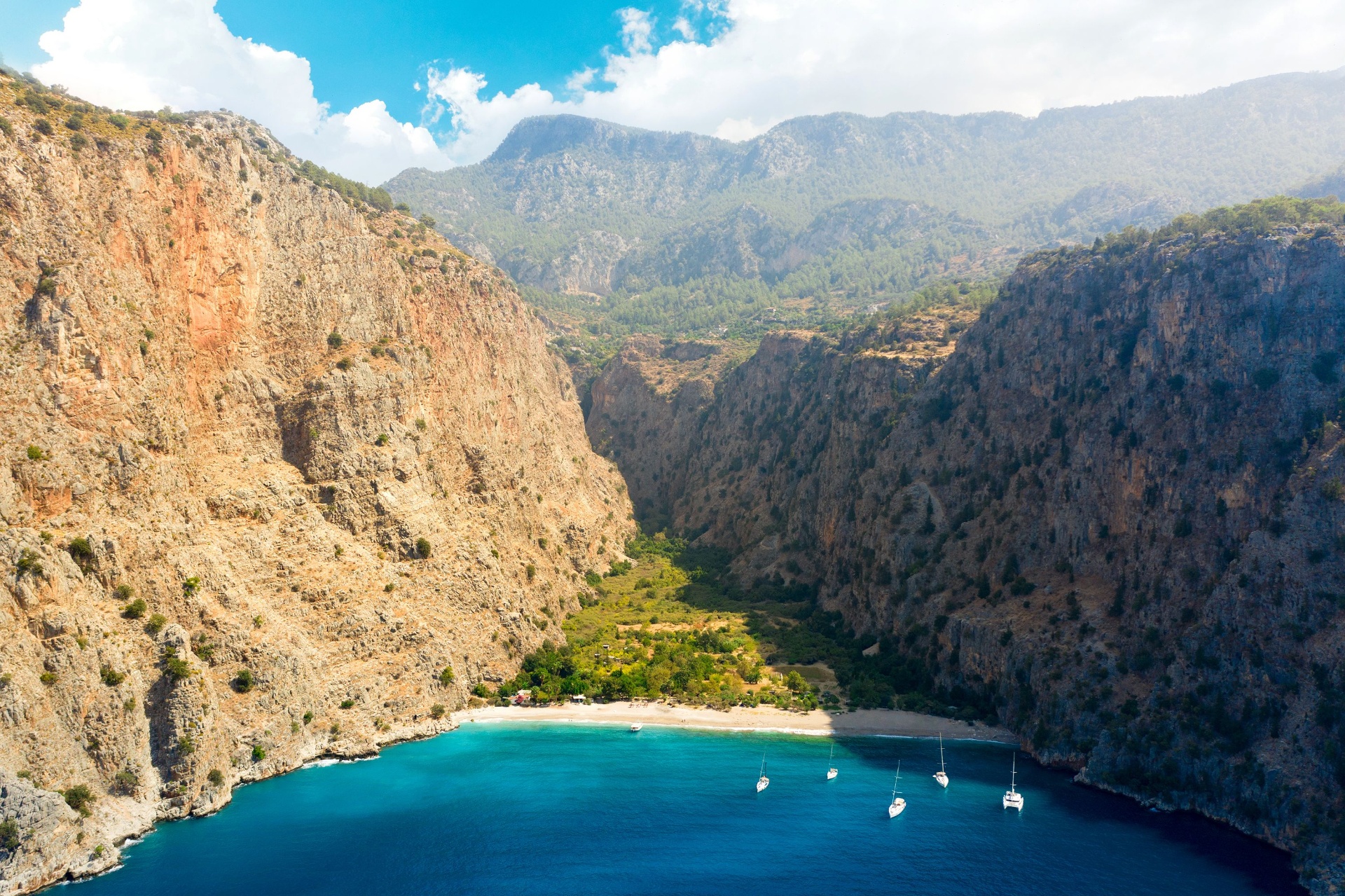
What is the Lycian Way?
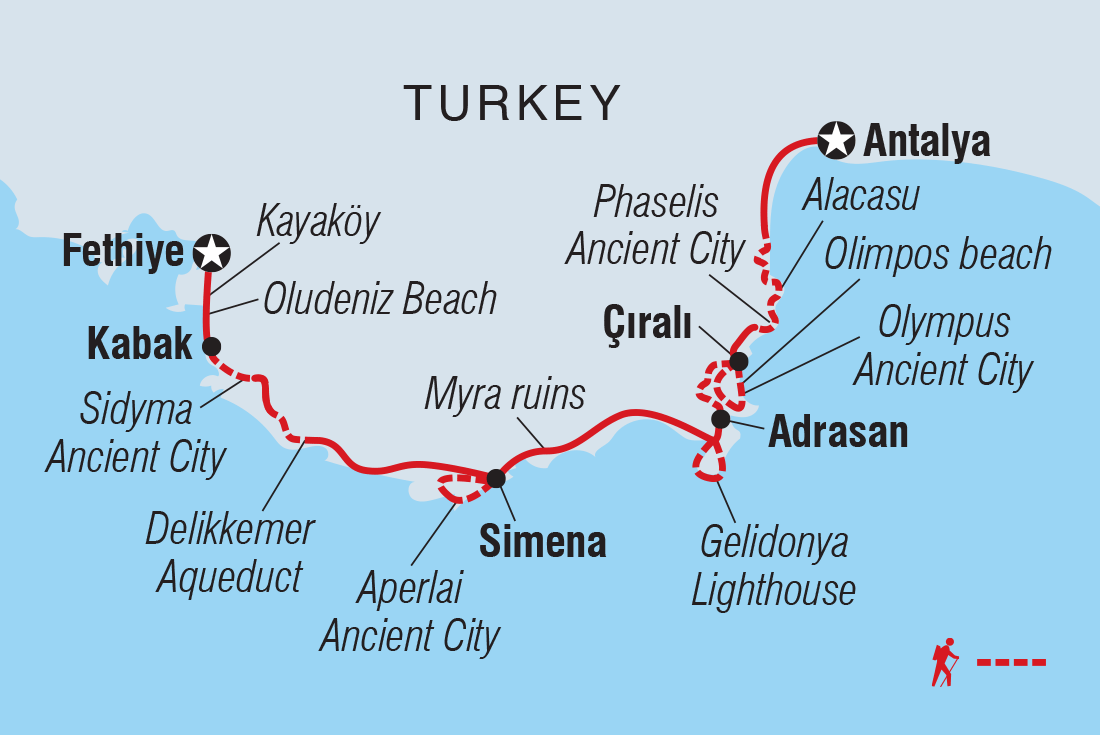
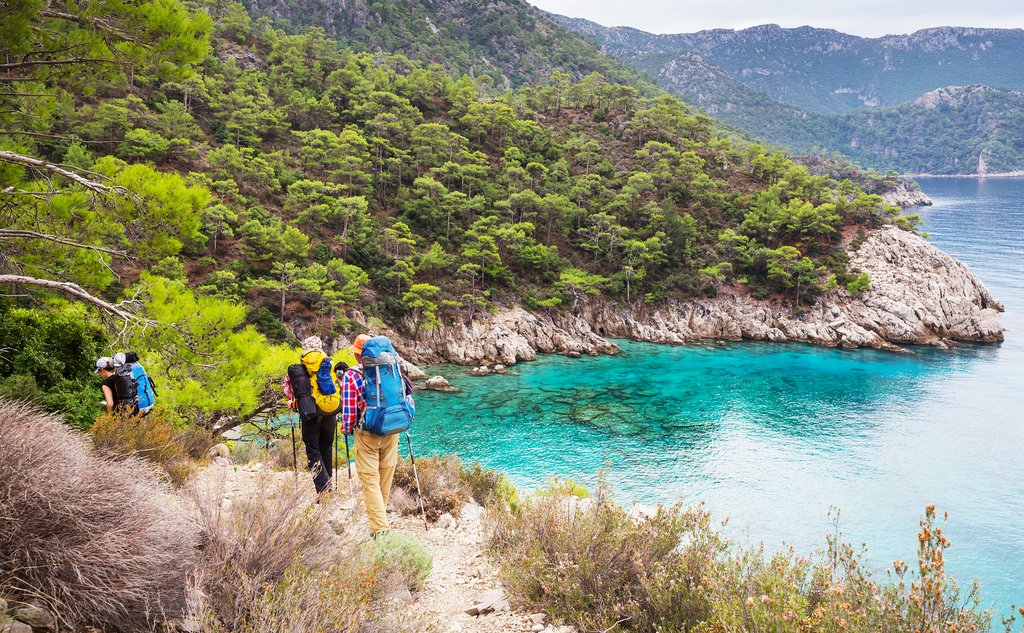
The Lycian Way — Likya Yolu in Turkish — is a 760-kilometre (470-mile) waymarked footpath that follows the coastline of ancient Lycia in southwestern Türkiye. Beginning in Ovacık near Fethiye and ending at Geyikbayırı near Antalya, the route weaves between pine-scented mountains and the Mediterranean Sea, passing through fishing villages, Roman ruins, and rock-cut Lycian tombs that predate Christ by half a millennium.
Researched and waymarked in 1999 by British author Kate Clow, the Lycian Way was Türkiye's first long-distance trail. Sunday Times Travel later named it one of the world's ten finest walks. Today it attracts more than 25,000 trekkers each year and remains the spiritual heart of the Teke Peninsula.
The Ancient Lycians
Long before it was a hiking trail, this was the homeland of the Lycians — a fiercely independent maritime people who inhabited the region from at least the 15th century BCE. The Hittites called them the Lukka, and Egyptian inscriptions name them among the "Sea Peoples" who clashed with Ramses II. Homer mentions them in the Iliad as allies of Troy.
The Lycians spoke an Indo-European language related to Hittite, wrote in their own alphabet derived from Greek, and built one of antiquity's earliest democratic federations — the Lycian League, established in the 2nd century BCE. The U.S. Founding Fathers studied its constitution; The Federalist Papers cite the Lycian League as a model of representative government.
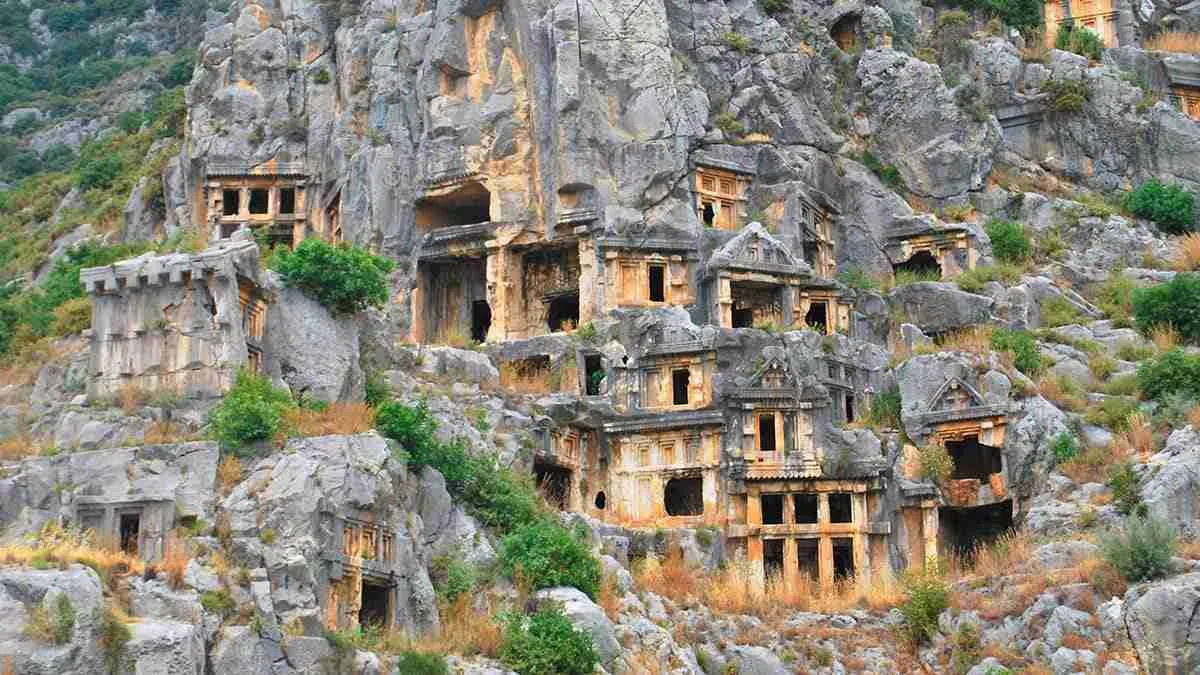
They are best remembered today for their architecture: monumental rock-cut tombs carved into cliff faces, sarcophagi shaped like upturned boats, and pillared shrines crowning entire necropolises. The most spectacular survive at Myra, Xanthos, Pinara, and Tlos — all reachable from the Lycian Way.
Who Walked This Road?
The paths that make up today's Lycian Way are a palimpsest of three millennia of footsteps. Persian armies under Cyrus the Great marched through these mountains in 546 BCE. Alexander the Great followed the coast in 333 BCE on his campaign east, accepting the surrender of Lycian cities one by one. Roman legions later widened and paved sections of the road — fragments of their cobblestones still surface beneath the modern waymarks.
Saint Nicholas — the historical figure behind Santa Claus — served as Bishop of Myra in the 4th century CE, walking this same coast. Byzantine pilgrims, Seljuk traders, Crusader knights, and Ottoman caravanners all left their mark. Goatherds and woodcutters from Yörük villages have used these tracks continuously into the present day.
From Antalya — the Gate of Hadrian
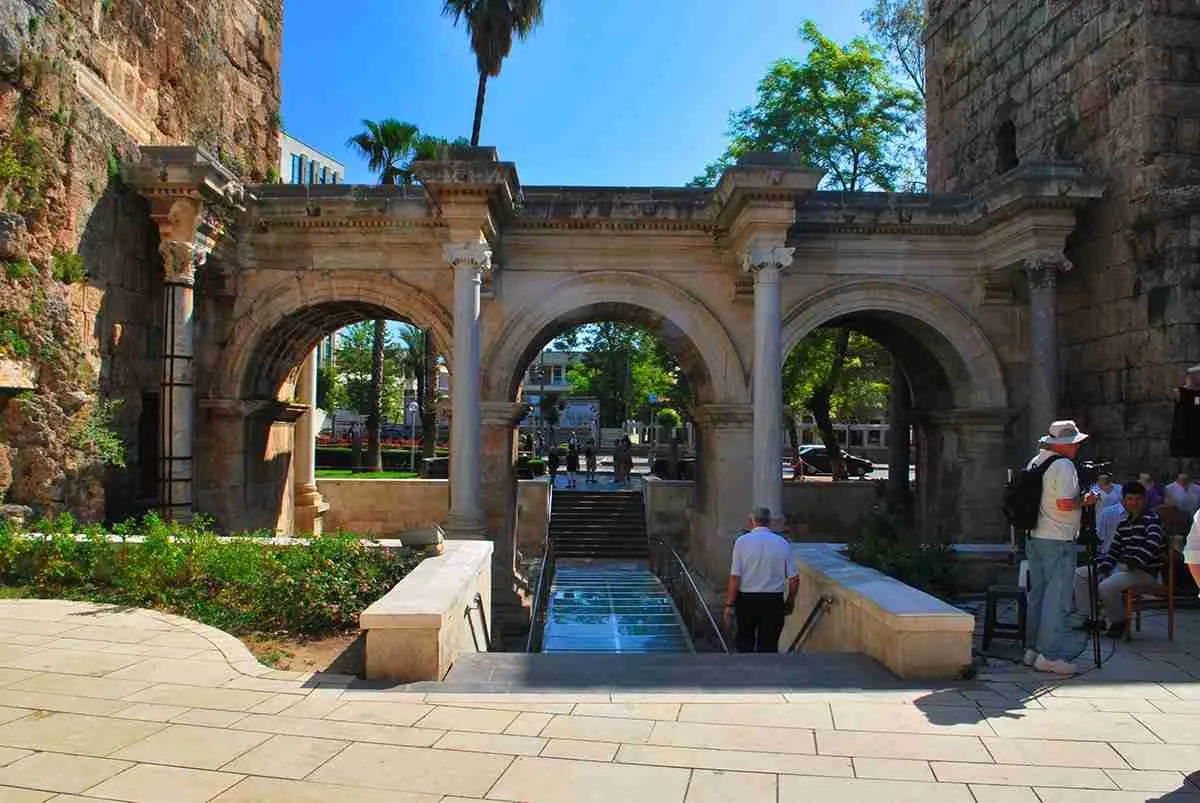
Antalya — host city of our festival — sits at the eastern terminus of the Lycian Way. The Roman emperor Hadrian visited in 130 CE, and the city built him a triple-arched marble gate that still stands in the heart of Kaleiçi, the old quarter. From there, the trail unfurls west: past Olympos and the eternal flames of Chimaera, through Kaş and Kalkan, along Patara's eighteen-kilometre beach, and finally to Fethiye.
Why the Lycian Way Inspired Our Festival
The Lycian Way is, above all, a road of stories. Every cove, every rock-cut tomb, every shepherd's path carries a narrative of journey, endurance, migration, and encounter. These are the themes our festival exists to honor — cinema as the modern continuation of an ancient human practice: telling each other where we've been, and where we're going.
When you watch a film at LikyaFF in Antalya each September, you are watching it at the end of a 760-kilometre story.
7 Must-See Stops Along the Lycian Way
From Fethiye in the west to Antalya in the east, these are the seven sites that capture the spirit of the trail — equal parts archaeology, landscape, and legend.
- 01
Ölüdeniz & Butterfly Valley
The trail's iconic opening kilometres — a turquoise lagoon and a hidden cove reachable only on foot or by boat.
- 02
Kayaköy
An eerie ghost village of 500 abandoned stone houses, emptied during the 1923 Greek-Turkish population exchange.
- 03
Patara
Birthplace of Saint Nicholas, capital of the ancient Lycian League, and an 18-kilometre golden beach where loggerhead turtles still nest.
- 04
Kaş & Kekova
A whitewashed harbour town overlooking the sunken Lycian city of Simena, half-submerged beneath crystal water.
- 05
Myra (Demre)
Spectacular rock-cut tombs and a Roman theatre, plus the basilica where Saint Nicholas served as bishop in the 4th century CE.
- 06
Olympos & Chimaera
Ruins overgrown by jungle beside a pebble beach — and a mountain that has burned with natural flames for over 2,500 years.
- 07
Phaselis
A three-harboured Roman port where Alexander the Great wintered in 333 BCE, now a forest of pines and toppled marble.
Lycian Way Quick Facts
- Length760 km (470 miles), waymarked end-to-end
- RouteOvacık (Fethiye) → Geyikbayırı (Antalya), along the Teke Peninsula
- Created1999, by British author Kate Clow — Türkiye's first long-distance trail
- DifficultyModerate to strenuous; rocky karst terrain with steep ascents
- Best seasonFebruary–May and September–November (mild temperatures, wildflowers in spring)
- Time to complete29–45 days end-to-end; most hikers walk it in sections
- Annual hikers~25,000 trekkers each year
5 Ancient Civilizations That Walked This Road
- 01
15th c. BCE
The Lycians (Lukka)
An Indo-European maritime people who built the Lycian League — one of antiquity's earliest democratic federations, later cited in The Federalist Papers.
- 02
546 BCE
Persians
Cyrus the Great's general Harpagus conquered Lycia; the city of Xanthos famously chose mass suicide over surrender.
- 03
333 BCE
Greeks under Alexander
Alexander the Great followed this coast east, accepting the surrender of Lycian cities one by one en route to Persia.
- 04
43 CE
Romans
Lycia became a Roman province under Claudius; Roman legions paved sections of the road still visible today.
- 05
4th c. CE+
Byzantines, Seljuks & Ottomans
Saint Nicholas served as Bishop of Myra; later, pilgrims, Crusaders, Seljuk traders and Ottoman caravanners all left their mark.
September 11–13, 2026 · Antalya Kültür Sanat
Back to the Festival